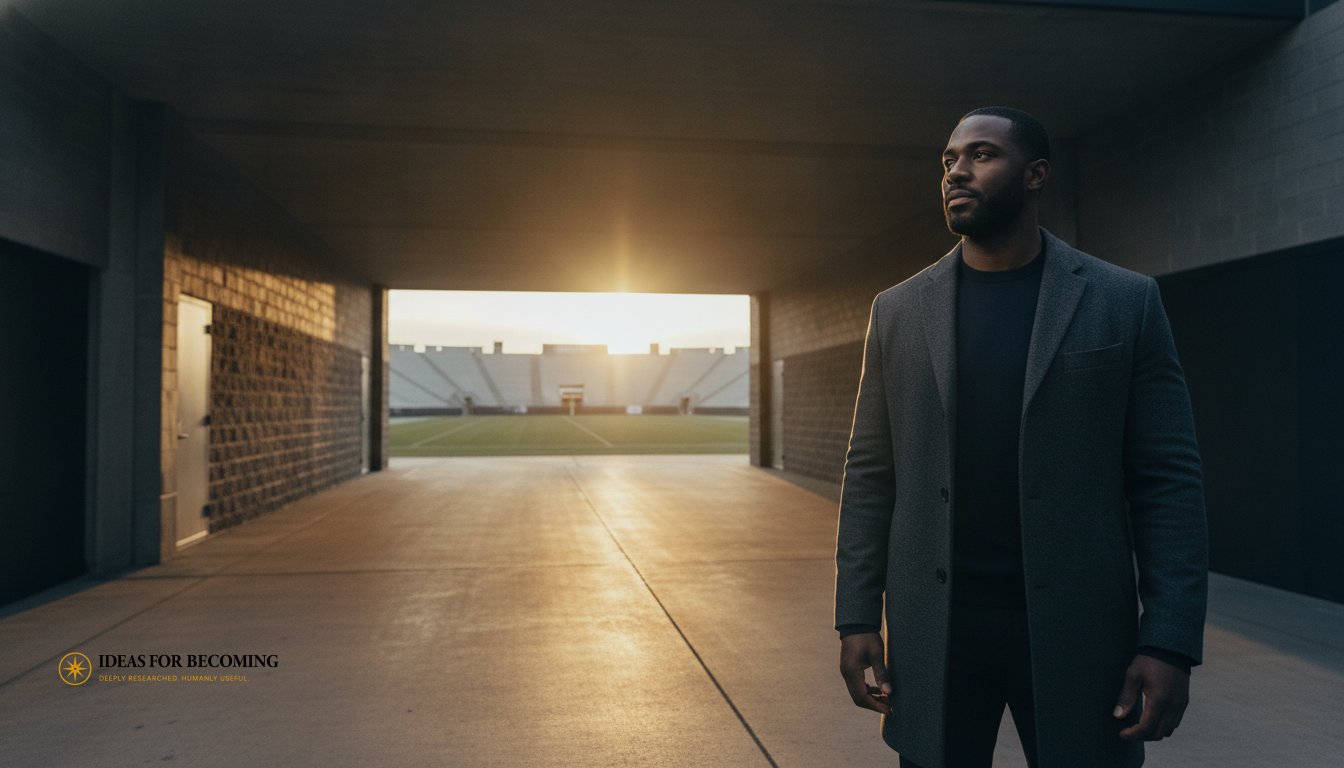
The jersey is not a garment. It is a second skin. When you peel it away for the final time, the air feels cold. You are told you've retired, but it feels more like a disappearance. This transition into life after professional sports is often the hardest contest you'll ever face. For decades, your worth was measured in statistics and seconds. Now, the stadium is empty. The silence is absolute.
You've lived a life of high stakes and singular focus. It's right to grieve the career that defined you since childhood. However, this is not a descent into irrelevance. It is an unmasking. Through my work advising leaders across 156 countries, I've seen that the end of performance is actually the beginning of a deeper realization. Who you were on the field was only a rehearsal for the human you are meant to be.
In this article, we'll move beyond the narrow identity of the athlete. We'll examine the framework of Human Becoming, a core philosophy in my forthcoming book, The Way, releasing September 15, 2026. You'll discover practical steps to bridge the gap between the field and the world. We'll find a path toward work that matches your previous intensity, proving that your greatest contribution is not what you did, but who you're becoming.
Key Takeaways
- Recognize that the end of your career is an existential unmasking. It requires a new framework for understanding your worth beyond the stadium lights.
- Challenge the belief that you're a finished product at thirty. Life after professional sports is not a decline; it is an invitation to a larger human story.
- Distinguish between the logistics of retirement and the deeper process of becoming. One manages your assets; the other manages your soul.
- Rebuild your daily structure through intentional practice. Use the principles of Human Becoming to find new work that matches your previous intensity.
- Prepare for your next evolution by adopting the philosophy of The Way, releasing September 15, 2026, as a guide for rebuilding after the cheering stops.
The Silent Whistle: Validating the Weight of the Transition
The whistle blows. The stadium lights dim. For the world, it's just another Tuesday. For you, it's the end of a world. The transition into life after professional sports is rarely a gentle exit. It's a profound disruption of the self. We often call it retirement. That word is too small. Retirement implies a rest well earned. Transition implies an evolution required. You aren't just leaving a job. You're losing a skin.
The silence that follows the roar of the crowd is heavy. It has existential gravity. You lived a life of high stakes. You lived a life of absolute structure. Now, the calendar is empty. The locker room is gone. This silence isn't a void to be feared. It's a space for reflection. It's the first time you've been forced to hear your own voice without the filter of a coach or a commentator. Who are you when the cheering stops?
The Anatomy of the Arena
Your identity was forged in the arena. It started when you were a child. You were the fast one. The strong one. The one who could handle the pressure. This wasn't just a career choice. It was a biological and psychological high. Every win released chemicals that told your brain you were exactly where you belonged. You were validated by the scoreboard every single day.
When the scoreboard disappears, the internal compass spins. Many face significant financial challenges for retired athletes, but the deeper crisis is one of meaning. If you aren't the person on the highlight reel, your worth feels fragile. Through four decades of observing high-level performance across 156 countries, I've seen that the most successful transitions are those that recognize the arena was a stage, not the whole story.
Grief as a Necessary Threshold
You must grieve the athlete. This isn't a clinical pathology. It's a human necessity. You've lost a persona that defined your every waking hour. Acknowledging this loss is the first step in the process of Human Becoming. In my work, Life After Anything, I emphasize that rebuilding requires more than just a new hobby or a business venture. It requires a new narrative. You're mourning a version of yourself that no longer exists.
Time alone does not heal. This is a common myth. Transformation comes through the repetition of new truths. You aren't recovering from sports. You're evolving beyond them. The Way is not something you find. It's someone you become. My flagship book, The Way, releasing September 15, 2026, explores this path in depth. You're standing at a threshold. The work of becoming has just begun.
Beyond the Jersey: The Myth of the Finished Identity
The jersey was a uniform. It was not a soul. Many athletes carry the weight of that fabric long after they've stopped wearing it. They believe their story ended with their final game. This is the myth of the finished identity. It suggests that your value peaked when your physical prowess did. It assumes that life after professional sports is a long, slow fading into the background of your own life.
We often mistake the peak of physical performance for the peak of human potential. These are not the same. One is a matter of muscle and bone. The other is a matter of character and will. Your physical prime is a chapter. Your human prime is the whole book. You aren't a used-up machine. You're a developing spirit who has finished one specific assignment.
The Danger of the Static Label
Labels are traps. They focus on what you were rather than who you are. When you're called a "former" athlete, the world is telling you that your most significant contributions are behind you. This mindset contributes to the heavy psychological effects of retirement that many struggle to overcome. You must move from "Who I was" to "Who I am becoming." Identity is a fluid process of character development that continues through every season of a life.
Society loves a static hero. It wants you to stay frozen in the moment of your greatest victory. But you're not a statue. You're a living, breathing process. If you stay tethered to the past, you'll never have the hands free to build the future. You have to be willing to let the athlete die so the human can finally live.
The Process of Human Becoming
Human Becoming is the core of my philosophy. It recognizes that elite performance was merely one expression of a deeper drive. The intensity you felt in the locker room is still inside you. It's simply waiting for a new direction. You're taking the discipline of the past and turning it into the meaning of the future. The discipline of the morning workout becomes the discipline of the morning reflection. The focus of the film room becomes the focus of the boardroom. You aren't starting from scratch. You're starting from experience.
The Way is not a path you find. It's a person you become. This philosophy is the foundation of my book, The Way, which releases September 15, 2026. It's a roadmap for those who refuse to be defined by their history. To explore how these principles apply to your own transition, you may find my leadership and life advisory a useful tool for charting this new evolution. You didn't lose your edge. You just need a new stone to sharpen it on.
Navigating the Way: A Framework for Re-Identification
Transition is usually sold as a checklist. Update the resume. Secure the pension. Find a hobby. These are the logistics. They are necessary, but they are also insufficient. The logistic transition manages your assets, while the existential transition manages your soul. In life after professional sports, most athletes fail not for lack of money, but for lack of meaning. They have a plan for their finances, but no plan for their humanity.
The philosophy of The Way offers a different path. It suggests that the end of your career is not a retirement from life, but an unmasking. The traits that made you elite, including obsessive discipline, resilience under fire, and the commitment to a collective goal, do not belong to the game. They belong to you. The arena has changed. The work of becoming continues. You aren't losing your identity; you're finally meeting the person who was wearing the jersey.
Static Identity vs. Human Becoming
A static identity is a ghost. It relies on past accolades to feel worthy in the present. It's the player who can only talk about the championship season twenty years later. This is a trap. Human Becoming, the core of my teaching, requires using that past discipline to build a new expression of leadership. You aren't starting over. You're evolving. The shift is from external validation to internal character. You must learn to value the process of growth more than the outcome of a score.
The performer lives for the applause. The human lives for the truth of their own evolution. Who are you becoming when the lights are off and the locker room is empty? This question is the only one that matters in this new season.
Finding the New Arena
Your next chapter requires more than a paycheck. It requires a calling. The intensity you brought to the field must find a new home. This pivot is where many struggle. The ordinary world often feels slow or trivial compared to the high stakes environment of elite sport. Finding where your unique drive can flourish next is the essential task of your new life. You're looking for a new arena where your character can have an impact.
This high stakes pivot is why many seek leadership advisory to navigate the integration of life and work. I've advised leaders in 156 countries, and the pattern is consistent. The most successful are those who realize their skills are transferable to global leadership. They don't look for a job to fill the time. They look for a mission to fulfill their character. Your greatest game is not behind you. It's the one you're currently becoming.
Practical Strategies for Rebuilding After Professional Sports
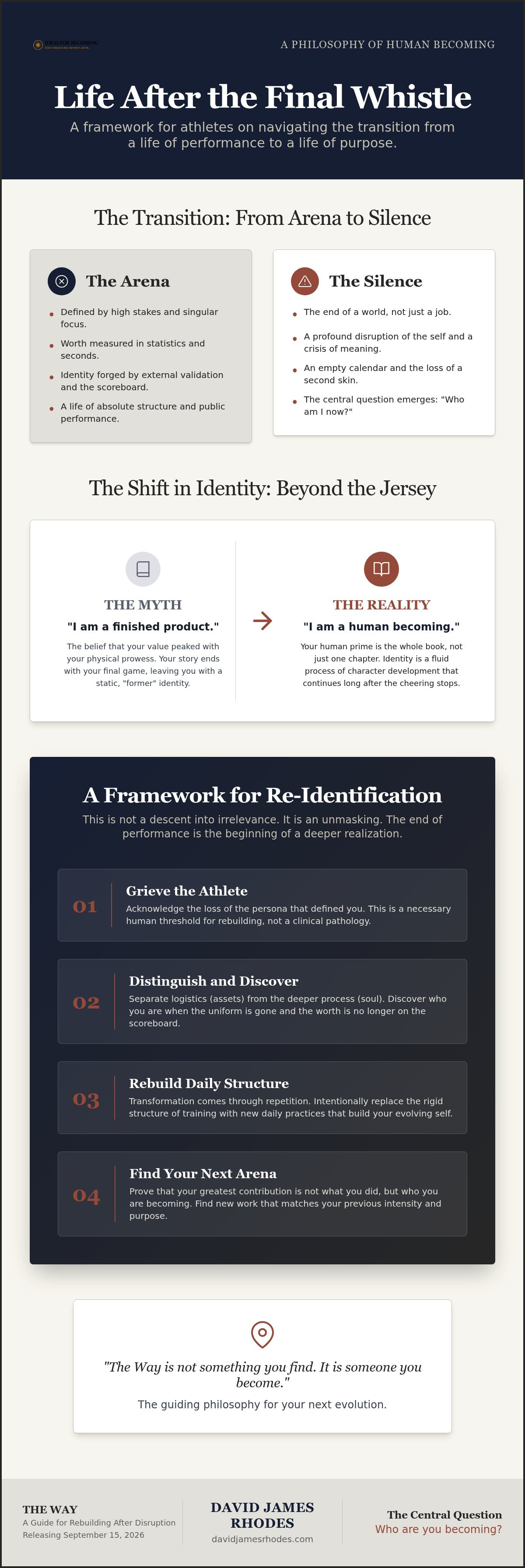
Strategy is the bridge between loss and evolution. In life after professional sports, the external structure of the team is gone. You must now build your own. This isn't about filling time. It's about filling a life. Rebuilding requires a methodical approach to your internal landscape. It demands the same intensity you once gave to the playbook. You cannot wait for a new purpose to find you; you must architect the person you are becoming.
You can't think your way into a new identity. You have to act your way there. This requires practical tools that ground your philosophical shift in daily reality. It requires a commitment to the quiet work of character when the stadium lights are dark. The transition is not a single event. It is a series of intentional repetitions.
The Daily Practice of Becoming
Repetition was your greatest ally on the field. It remains your greatest ally now. The post-sport brain is wired for high-stakes intensity and rhythmic discipline. Without a target, that energy often turns inward and becomes destructive. I recommend using 365 Days of Becoming as a tool for daily intentionality. It's a practice of rewiring. You are re-establishing a sense of agency in a world that no longer provides a scoreboard. Small wins in character development are the new metrics of success.
Reflection is not a passive act. It is a strategic one. Using the Life After Anything Companion Guide & Workbook allows you to dissect the past without being trapped by it. You must identify which parts of the athlete were your core and which parts were merely the costume. This is the work of integration. It is how you ensure your past discipline serves your future meaning. You aren't burying the athlete; you're harvesting the lessons they learned.
Re-envisioning Your Community
The locker room was a sanctuary. It was also a bubble. To grow, you must find witnesses to your evolution, not just fans of your past. Fans want you to remain the person they remember. Witnesses want to see who you will become. This requires connecting with global perspectives beyond the sports world. I've observed this need for broader context across 156 countries. Human struggle is universal. Your specific version of it is just one door into a larger human story.
There is profound meaning in developing resilience in young leaders. When you mentor the next generation, you prove that your skills transcend the game. You move from being a performer to being a strategist. This shift is essential for a sustainable life. If you are ready to begin this process, explore my Life After Anything resources to chart your next evolution.
The Way Forward: Embracing Your Next Evolution
The end of the game is an invitation. It is a call to a larger life. Most see the end of a career as a closing door. It is actually the removal of a wall. You've spent years in a narrow corridor of performance. Now, the horizon is wide. Life after professional sports is the first time you get to choose your own direction without the constraints of a season or a contract. The silence you feel isn't an absence. It's a beginning.
This evolution is not a project to be finished. It is a state to be inhabited. You are moving from being a performer to being a person. The unknown is not your enemy. It is your laboratory. You have the discipline. You have the resilience. Now, you must find the courage to be a beginner again in a world that doesn't care about your past statistics.
The Way: Not a Path, but a Person
The search for a perfect next job is often a distraction. You don't need a destination; you need a foundation. The goal is not to find a new role, but to build a worthy next self. This is the central thesis of my flagship philosophy. You can explore how to find your footing in The Way book, which releases September 15, 2026. It serves as a roadmap for those who recognize that the way is not something you find. It is someone you become.
Human Becoming is a journey without a finish line. It requires you to trade the external validation of the scoreboard for the internal truth of your own growth. You aren't losing your edge. You're refining it for a different purpose. The transition is simply the process of letting the athlete subside so the human can finally emerge.
Engaging with the Next Generation
Your transition is a blueprint. Every struggle you navigate creates a path for those following you. This is how legacy is built. It isn't found in trophies or retired numbers. It's found in the wisdom you pass on. In my work as an advisor across 156 countries, I've seen that the most respected veterans are those who turned their personal disruption into a curriculum for others. Your experience is a global asset.
Advisory is more than giving advice. It's about shaping the future. You have a responsibility to the next generation to show them that the end of the jersey is not the end of the man. The beauty of the unknown is that it remains unwritten. You hold the pen. The stadium is empty, but the world is waiting. Who are you becoming now that the game is over?
The Unwritten Chapter
The final whistle is not the end of your story. It's the beginning of your unmasking. We've seen that the jersey was a uniform rather than a definition of your humanity. Identity is a fluid process of character development. By establishing a daily practice of reflection and seeking advisory that understands the intersection of elite performance and raw experience, you can navigate the silence of a post-performance life.
Life after professional sports requires a new North Star. It demands that you trade the external validation of the crowd for the internal truth of your own evolution. This is the essence of Human Becoming. David James Rhodes has spent more than four decades advising global leaders across 156 countries on these very thresholds. He offers a steady presence for those ready to move beyond the athlete persona and into a larger human story. The stadium is empty. The world is waiting. Your greatest contribution is still ahead of you. It's time to discover who you are capable of becoming when the cheering stops. Explore The Way and the philosophy of Human Becoming.
Frequently Asked Questions
How do professional athletes cope with retirement?
Athletes cope by shifting their focus from the scoreboard to the internal process of growth. It is not about finding a new game, but about realizing the game was a stage. Many utilize structured daily practices to manage the sudden loss of external routine. This involves validating the grief of the lost persona while intentionally building a new narrative that honors their previous discipline without being trapped by it.
What is the hardest part of leaving professional sports?
The hardest part is often the absolute silence that follows the roar of the arena. It is the existential gravity of losing a singular identity that was forged in childhood. When the external validation of statistics and fans disappears, the individual is forced to confront the question of who they are without the jersey. This disruption affects their sense of worth, social structure, and daily purpose simultaneously; it creates a profound sense of isolation.
How can I find a new identity after my sports career ends?
Finding a new identity in life after professional sports requires moving from a static definition to a fluid process. You must recognize that the traits that made you elite are transferable to new arenas. Identity is not a destination you reach; it is a character you develop through daily intention. By viewing yourself as a human becoming, you allow space for evolution beyond the narrow labels of your past athletic achievements.
Are there specific books for athletes transitioning to a new career?
Yes. My book, Life After Anything, serves as an essential text for rebuilding after major life disruptions. For those seeking a daily practice of intentionality, 365 Days of Becoming provides a structured framework for growth. Additionally, my flagship work, The Way, releasing September 15, 2026, offers a deeper philosophical roadmap for navigating the search for meaning and identity after the cheering stops. These works focus on the person you are becoming.
What is the "Human Becoming" philosophy for athletes?
The Human Becoming philosophy posits that you are not a finished product defined by your athletic peak. It shifts the focus from what you do to who you are becoming. For an athlete, this means the discipline and resilience learned in sport are merely tools for a larger evolution. It is a commitment to continuous growth and character development that transcends the boundaries of the playing field and the locker room.
How do I handle the loss of purpose after professional sports?
Handling the loss of purpose in life after professional sports requires finding a new arena where your unique drive can flourish. You don't need a job to fill the hours; you need a mission to fulfill your character. This involves auditing the core values that drove your athletic success and applying them to global challenges or leadership roles. Purpose is not found in the past. It is built through the repetitive pursuit of a new, worthy calling.
Is it normal to feel depressed after retiring from sports?
It is common to experience a heavy psychological burden after the jersey is retired. The loss of structure, community, and identity can lead to significant distress. While clinical support is often necessary for stabilization, long-term recovery requires building a sustainable life beyond the removal of symptoms. It is a normal human response to a profound life disruption. You are not failing; you are transitioning through a difficult threshold of identity.
How can a leadership advisor help an athlete in transition?
A leadership advisor provides a global perspective on your personal struggle. Drawing on four decades of experience across 156 countries, I help athletes translate their elite performance into high-level leadership and life strategy. An advisor acts as a witness and strategist; they help you navigate the intersection of high-stakes reality and raw human experience. We work together to ensure your next chapter is defined by your character rather than your previous statistics.
Frequently Asked Questions
Related Articles

Behavioral Health and Leadership: Navigating the Intersection of Performance and Being
At the intersection of behavioral health and leadership, we move past the false choice between performance and wellness. Lead from a place of authentic whole...

Choosing a Leadership Speaker: A Guide to Human Becoming
Find a leadership speaker for educational institutions who moves beyond slogans to guide the process of human becoming. Choose quiet authority over hollow no...

Beyond Motivation: Finding a Speaker on Youth Leadership and Identity
Choose a speaker on youth leadership and identity who focuses on who students are becoming, not just what they can do. Move from empty motivation to real cha...