
A setback is not the end of progress. A personal growth strategy for high-achievers turns difficulty into useful information: learn from what happened, ease perfectionism, protect the energy you need to continue, choose opportunities that reflect your values, and build on practices that work. The aim isn’t to avoid failure. It’s to respond with greater clarity.
Achievement can foster discipline and drive. It can also make every mistake feel like a verdict and every pause feel undeserved. If that tension feels familiar, growth may require more than setting a higher goal. It may mean changing how you measure progress.
This article offers five practical ways to do that. You’ll learn how to review setbacks without defining yourself by them, replace perfectionism with steady improvement, treat self-care as part of sustainable effort, assess opportunities against your values, and identify habits worth your attention. The goal isn’t to become someone who never struggles. It’s to become someone who can learn, choose, and keep moving with purpose.
Key Takeaways
- Turn setbacks into information by identifying what happened, what it revealed, and what you’ll adjust next.
- Replace the demand for flawless performance with attention to progress, learning, and self-compassion.
- Protect the conditions that sustain good work, including rest, personal time, and boundaries.
- Assess opportunities against your values and current commitments before taking them on.
- Notice which practices produce meaningful results, then give those habits more room to work.
1. Growth mindset and learning from setbacks
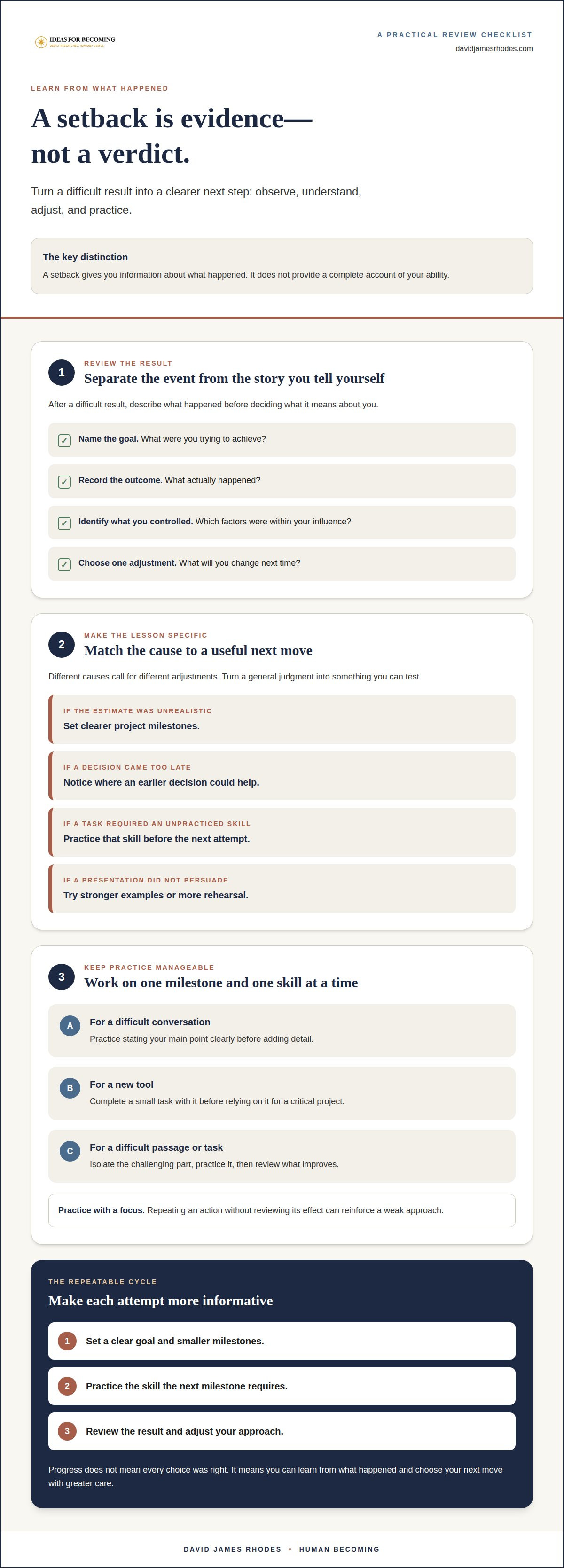
A setback gives you evidence, not a complete account of your ability. After a missed deadline, separate what happened from what you assume it means. Perhaps your estimate was unrealistic, a decision came too late, or the task required a skill you hadn’t practiced. Each cause suggests a different next step. That distinction turns reflection into learning rather than self-judgment.
Use a brief review after a difficult result. Record the goal, the outcome, the factors you controlled, and one adjustment for next time. A project that ran over schedule might need clearer milestones. A presentation that failed to persuade might need stronger examples or more rehearsal. Specific observations make a growth mindset practical. They give you something to test, not just a reason to try harder.
The difference between a growth mindset and perfectionism lies in how each responds to mistakes. A growth mindset treats an error as information for improvement; perfectionism can make it feel like proof that your work or ability is inadequate. The first supports learning through revision, while the second can keep you from taking necessary risks.
Make your next attempt manageable. Break a large goal into milestones, then identify the skill each one requires. If you’re preparing for a difficult conversation, practice stating your main point clearly before adding detail. If you’re learning a new tool, complete a small task with it before relying on it for a critical project. Give each practice session a focus. Repeating the same action without reviewing its effect can reinforce a weak approach.
Curiosity keeps experience from becoming routine. After a meeting, ask which question shifted the discussion. After a decision, note what information shaped it and what you would seek next time. These small inquiries make continuous learning part of leadership, not something reserved for formal training. They also reveal where your confidence rests on real skill and where it rests on familiarity.
For a practical framework, pair growth-oriented reflection with structured goal review. Set a clear goal, break it into smaller milestones, practice the relevant skill, then review the results and adjust. This repeatable cycle offers a grounded approach without treating any single branded method as right for every high-achiever.
Resilience grows through returning to practice. A musician who misses a passage can slow down, identify the difficult transition, and rehearse that part before playing the full piece again. The same principle applies at work: isolate where things went wrong, test a specific change, and observe what improves. Deliberate review makes effort more informative. Progress doesn’t prove that every choice was right. It shows you can learn from what happened and choose your next move with greater care.
Perfectionism and fear of failure
Perfectionism often hides in standards that once helped you succeed. An executive may revise a presentation repeatedly, not because its reasoning is weak, but because one imperfect phrase feels dangerous. The work expands while sharing it gets delayed. Over time, caution can become a habit that limits experimentation and makes ordinary uncertainty feel threatening.
Excessive self-improvement carries similar risks. If every experience becomes another test to pass, ambition can crowd out relationships, rest, and the simple pleasure of doing something for its own sake. A runner who turns every run into a performance measure may lose the joy that first made running meaningful. Growth should deepen your life, not make every hour answer to a scorecard.
Self-criticism can turn a specific mistake into a sweeping conclusion. “I missed an important detail” describes an event; “I can’t be trusted” condemns the person. After a difficult client call, describe what you said, how it affected the conversation, and what you want to do differently. This keeps accountability intact without letting one experience define your ability.
Curiosity can help you distinguish fear from genuine alignment. Before accepting a high-profile role, write down what attracts you and what you fear would happen if you declined. If your strongest reason for accepting is avoiding someone’s disappointment, pause before agreeing. If the work reflects a lasting passion or responsibility you value, consider its demands carefully. The point isn’t to eliminate fear, but to understand what it is protecting.
Self-compassion doesn’t excuse careless work. It lets you examine a mistake without adding contempt. After a proposal receives criticism, identify what needs revision and which feedback doesn’t apply. Then make the necessary changes and move on. Treating yourself fairly makes it easier to learn from experience without building an impossible standard around one response.
Define what “ready” means before starting a task. For a proposal, that might mean a clear recommendation, accurate supporting details, and a review by a trusted colleague. Once those conditions are met, send it. Without a stopping point, further polishing can become a way to postpone judgment. A clear standard protects quality while leaving room for measured risks.
For a private check-in, note one decision you delayed this week. Write down what you feared, what the delay cost, and the smallest next action that would bring the matter into the open. This shifts your focus from the demand to be flawless toward the more useful choice to act with care. Excellence can matter without becoming the price of self-respect.
3. Reframing self-care as productive
Ambitious goals demand more than sustained effort. High-achievers can reduce the risk of burnout by protecting sleep, eating regularly, setting work boundaries, and taking mindful breaks. These practices don’t guarantee an easy path. They help create conditions for focused work and steadier resilience, especially when demanding projects require sustained attention.
Make room for recovery in your calendar. Schedule personal time alongside important work, then treat that commitment as part of the plan. A short walk between meetings, an evening hobby, or a screen-free afternoon can mark a clear transition away from work. Without boundaries, professional tasks can spill constantly into home life.
Make your routine specific enough to follow. Choose a regular time for a meal away from your desk, a brief breathing pause, or exercise that fits your day. Protect sleep by setting a stopping point for email. If a deadline disrupts your routine, decide when you’ll return to it. Consistency matters more than designing an ideal routine you can’t maintain.
Self-care also means noticing patterns before they become entrenched. Once a week, write down what gave you energy, where you felt aligned, and what needs replenishing. If back-to-back meetings leave you depleted, create space between them when possible. If a creative activity restores your attention, give it a regular place in your schedule instead of waiting for spare time.
Relationships are part of that structure. Emotional intelligence starts with recognizing your own response, then listening before reacting. In a tense meeting, pause and ask a colleague what concern lies behind their objection. With family, put away your phone and hear the full account before offering solutions. These actions build trust through attention, not performance.
Support networks can make demanding periods feel less solitary. Talk with a trusted friend, family member, mentor, or colleague when work begins to crowd out sleep or meaningful connection. Be specific about the support you need: a listening ear, another perspective, or help deciding what can wait. Making room for others to speak also deepens mutual trust.
Rest isn’t a prize for reaching the next milestone. It’s part of pursuing excellence without treating yourself like a machine. If saying no is difficult, try a clear sentence: “I can’t take this on without dropping an existing commitment.” You don’t need to overexplain a boundary. Protecting your time and energy can help you stay present for work, relationships, and the life those goals are meant to serve.
That protection can take different forms. Meditation, exercise, and deep breathing are suggested ways to manage stress, while social activities can be scheduled instead of left to chance. Adequate sleep and nutrition also belong in self-care and recovery. Hobbies and other activities beyond work can give personal time a meaningful place in your routine.
Schedule that time in your day, then stay consistent and accountable to yourself as you manage stress and recovery. Unplugging from screens for an afternoon is another option. Together, these choices can keep self-care part of the plan, even when work is demanding.
4. Filtering opportunities against mission and values
A new opportunity can look like progress and still pull you away from what matters. A promotion may bring influence but reduce time for family, health, or meaningful work. Before deciding, define success beyond visible accomplishments. Name the values you want your choices to express, such as service, learning, creativity, or responsibility. Then assess the opportunity against those values, not prestige alone.
Write a brief decision note for each significant invitation. Describe the work, the people it serves, and the value it could advance. Then record its likely demands and what you would need to decline to make room. For example, leading a new initiative may support a commitment to developing others but conflict with a preference for hands-on work. Writing both sides makes the trade-off visible.
Review your existing commitments before adding another. List current projects, recurring responsibilities, and promises you’ve made. Mark which still serve your priorities and which continue mainly out of habit or obligation. If a new role requires evening availability, consider its effect on an ongoing family commitment or personal goal. Capacity isn’t just about hours; attention and energy matter too.
Set a weekly time to review opportunities that came up during the week. Ask whether each advances your chosen mission, fits your values, and deserves space alongside current responsibilities. A brief written record can reveal patterns. If you repeatedly accept work to avoid disappointing someone, that pressure may be shaping your decisions more than genuine interest.
Values can clarify decisions, but they don’t remove challenges. A role aligned with service may still bring stress, difficult conversations, and uncertain outcomes. Consider whether those demands are meaningful costs or warning signs of a poor fit. For instance, a leadership role may involve conflict and still suit someone committed to building a fairer team. The question isn’t whether the work feels easy. It’s whether its demands serve a purpose you accept.
Pause deliberately when praise or urgency is driving a decision. You might say, “I need to review my current commitments before I answer.” Then write down what the opportunity asks of you, what it offers, and what it would displace. This creates room to distinguish genuine enthusiasm from the short-lived pull of recognition. It also helps prevent a considered “no” from turning into an impulsive yes.
Revisit decisions as circumstances change. A commitment that once supported your mission may no longer fit after a change in health, family needs, or work direction. In your weekly review, note what remains aligned and what needs a conversation or adjustment. Choosing well isn’t a single act. It’s the practice of bringing your time, effort, and opportunities back in line with the life you intend to lead.
5. Identifying and reinforcing successful practices
Set long-term goals around a value you want your work to serve, then track progress through observable milestones. If your aim is to lead more effectively, record actions such as inviting quieter colleagues into decisions and following through on their ideas. Review the evidence, not just the outcome. This helps reveal which activities support meaningful progress.
Start by noticing what already works. After a successful project, ask why it went well: Was the purpose clear? Did a colleague offer timely feedback? Did focused work happen before meetings began? Specific answers help distinguish repeatable practices from favorable circumstances. They also show where you can build on your strengths without assuming any single factor caused the success.
Look at areas for development through evidence, too. Compare your intended results with what happened, then ask a trusted colleague what they observed. For example, you may be strong at setting direction but less consistent at delegating follow-up. Name the behavior, identify its effect, and choose one practice to improve. A useful assessment is honest without turning a gap into a judgment about your character.
Use the 20% of activities that produce 80% of results as a prompt for prioritization. Look across recent projects and identify the work that made the greatest difference. A manager might find that clear one-to-one conversations prevent repeated misunderstandings. Give high-impact activities more time and resources, while reconsidering tasks that consume attention without advancing the goal.
Build sustainable habits by linking a useful action to an existing part of your day. After a weekly team meeting, write down one decision and who owns it. Before ending the workday, note the next step on your main project. A stable cue and a modest action make a practice easier to repeat. Share approaches that work with colleagues so success can strengthen the wider environment, not just individual performance.
Reinforcement matters. Acknowledge small accomplishments, such as completing a difficult conversation or asking for feedback early. Then ask what made that action possible. Perhaps you prepared a clear question or chose a quieter setting. Recording those conditions helps you repeat them and lets others learn what helped the team thrive.
Review your growth plan regularly. A brief weekly check can capture progress, obstacles, and the next action; a deeper monthly review can show whether the goal still fits your direction. Adjust your method when the evidence calls for it, not simply because progress feels slow. The aim isn’t to perfect yourself through constant revision. It’s to keep practices that serve the work and release those that don’t.
Keep a written record of practices that have proved effective, then share them so colleagues can use what works. When deciding where to focus effort, direct more resources to high-impact activities instead of spreading support evenly across every task. After a success, ask why things went well. That can reveal useful practices, just as reviewing what went wrong can show what needs to change. Celebrate achievements, however small, and use that recognition to reinforce the value of progress.
David James Rhodes
David James Rhodes explores how achievement, setbacks, and changing priorities shape who we become. When personal reflection calls for a wider perspective, his Leadership & Life Advisory offers a place to examine choices, values, and the direction of your next steps. His philosophy, expressed through The Way asks a deeper question than how to reach the next goal: who are you becoming as you pursue it?
For leaders weighing demanding opportunities or reconsidering what success means, this perspective connects practical decisions with character and purpose. It doesn’t replace the work of choosing. It can help bring that work into clearer focus.
To explore these questions in conversation, contact David James Rhodes.
Choose the person your next decision asks you to become
Progress isn’t measured only by what you accomplish. It’s also shaped by the character you practice while pursuing it. A personal growth strategy for high-achievers becomes meaningful when ambition and daily choices serve the same life. That alignment takes attention. It may mean changing direction or continuing without immediate recognition.
Let your next step be small enough to take and honest enough to matter. Choose one decision you’ve been postponing. Name the value it should reflect, then act in a way you can respect, whatever the outcome. This is how a direction becomes more than an idea. It becomes part of who you are becoming.
To explore that next step with David James Rhodes, contact him. You don’t need a perfect plan to move forward. You need a clear reason to take the next honest step.
Frequently Asked Questions
What are the best personal growth strategies for high achievers?
The most useful strategies connect meaningful goals with regular reflection and deliberate action. Choose one area that matters now, such as communicating more clearly during conflict, and define what progress would look like in real situations. Ask a trusted colleague for specific feedback, then test one change in your next conversation. A personal growth strategy for high-achievers should support both accomplishment and the person you want to become.
Frequently Asked Questions
Related Articles

Executive Guidance on Ethical Leadership Principles for Building Trust
Executive guidance on ethical leadership principles shows how honesty, fairness and accountability build trust, credibility and guide everyday decisions.

Purpose-Driven Life Advisory for Professionals: Work With Purpose
Purpose-driven life advisory for professionals connects your values to leadership and daily work, helping you pursue meaningful goals and lasting fulfillment.

Mentorship for Aspiring Global Leaders: Track Outcomes and Impact
Mentorship for aspiring global leaders builds practical skills and sound judgment. Learn to set goals, make cross-cultural matches, and assess impact.