
You sit in the boardroom. Your world is fracturing. You feel like a fraud because you suffer while others seek your strength. What if the crisis you're hiding is the source of your authority? For many, the concept of leadership through personal struggle feels like a career death sentence. You've been taught that vulnerability is a liability. You've been told that to lead is to be bulletproof. This creates a hollow isolation. It forces a choice between your professional identity and your human reality.
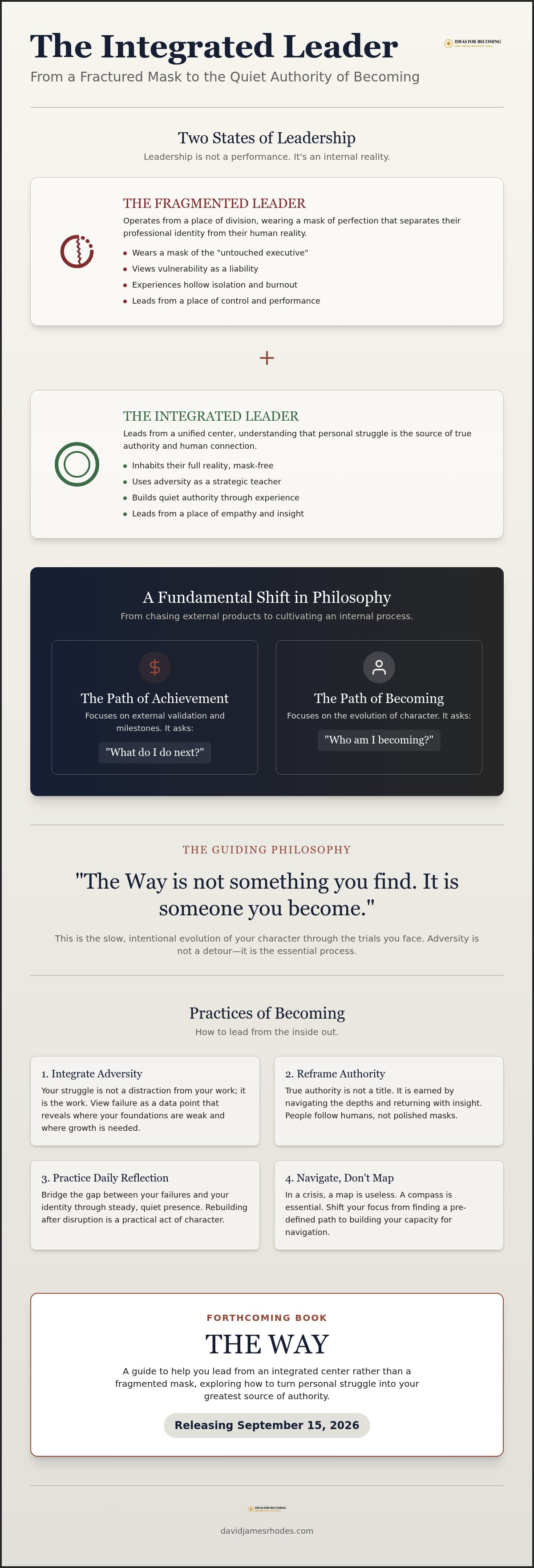
I've spent forty years across 156 countries. I've learned that true authority isn't a title. It's a result of human becoming. In my book, The Way, I explore the reality that The Way isn't something you find; it's someone you become. This article provides a framework to view your struggle as a source of quiet power. You'll discover how to lead from an integrated center rather than a fragmented mask. We'll examine practical wisdom for navigating adversity without losing your soul. Who are you becoming in the dark?
Key Takeaways
- Drop the mask of the untouched executive. Dividing your professional role from your human reality creates a hollow existence that eventually leads to burnout.
- Realize that leadership through personal struggle is the forge of true authority. Adversity is not a detour. It's the essential process of human becoming.
- Move from a focus on achievement to a focus on being. The Way isn't a destination you find. It's the person you become through the navigation of life's extremes.
- Use daily reflection to bridge the gap between your failures and your identity. Rebuilding after disruption is a practical act of character that requires a steady, quiet presence.
- Anticipate the release of The Way on September 15, 2026. This forthcoming guide helps you lead from an integrated center rather than a fragmented mask.
The Fragmented Leader: Moving Beyond the Mask of Perfection
Many leaders believe their authority depends on a performance of perfection. They wear a mask. It is polished. It is impenetrable. They think this mask protects their team, their board, and their reputation. But there is a cost. The cost is fragmentation. When you split the "leader" from the "human," you create a divide that cannot hold. Burnout is not just a result of long hours. It is the exhaustion of maintaining a lie. This division drains your capacity to lead with clarity. It turns your role into a cage.
Leadership through personal struggle requires a different approach. It asks you to stop performing and start inhabiting your reality. Your adversity is not a distraction from your work. It is the work. It reveals the blind spots that success often hides. Your personal failure is a data point. It shows you where your foundations are weak. What does your current crisis tell you about your need for control? What does it reveal about your capacity for empathy?
The Weight of the Executive Mask
High-stakes environments demand a specific kind of silence. You are expected to be the anchor. This expectation often turns professional distance into emotional isolation. In my forty years across 156 countries, I've seen elite performers crumble because they had no place to be human. An untouched leader is a disconnected leader. If you cannot feel your own pain, you cannot understand the pain of your organization. This disconnect is a strategic failure. It prevents you from seeing the world as it actually is. It limits your ability to navigate the complexities of global leadership.
Adversity as a Strategic Teacher
Failure is a harsh instructor, but it is honest. When you lose a business, a marriage, or your health, the superficial layers of your identity are stripped away. What remains is your character. This process is often described as post-traumatic growth. It is the realization that struggle can lead to a more profound sense of purpose and resilience. It is not about bouncing back to who you were. It is about evolving into who you must be.
Personal struggle builds a quiet authority that command-and-control tactics can never replicate. People don't follow masks. They follow humans who have navigated the depths and returned with insight. Leadership through personal struggle isn't about surviving a crisis; it's about being changed by it. Struggle is the forge of character, not the enemy of it. It creates a leader who is integrated rather than fragmented. This integration is the foundation of human becoming. It turns a professional identity into a lived reality. Who are you becoming when the mask finally slips?
Becoming vs. Achieving: A Shift in Leadership Philosophy
Most corporate structures are built on the altar of achievement. We track metrics. We celebrate milestones. We chase a destination that always seems to stay just out of reach. But achievement is a product. It's external. It doesn't account for the internal reality of the person holding the title. Human becoming is different. It is a continuous process of growth that doesn't end with a promotion or a successful exit. It's the slow, intentional evolution of your character through the trials you face.
Leadership through personal struggle is the catalyst for this shift. When your world fractures, the metrics of achievement lose their meaning. You can't "win" your way out of grief or a broken identity. You have to navigate through it. This navigation is what defines you. You aren't "finding yourself" in the wreckage. That implies you were already there, just hidden. Instead, you're becoming someone new. You're being forged by the heat of the crisis. This is a universal truth I've observed while navigating 156 countries. Hardship doesn't respect borders. It only respects the truth of who you are.
The Way as a Process, Not a Product
When you're in the middle of a personal storm, the instinct is to ask, "What do I do next?" You want a map. You want a checklist. But maps are for places that have already been discovered. When you're facing a unique disruption, you need a compass. You need to shift the question from "What do I do?" to "Who am I becoming?" This is the core of The Way book, which is forthcoming on September 15, 2026. It proposes that The Way isn't a perfect path you find. It's a person you become through the act of navigation. It requires intentionality. It demands that you stay present in the discomfort rather than rushing to the next visible "win."
Global Insights on the Human Landscape
Navigating international finance and entrepreneurship mirrors the internal navigation of a personal crisis. Both require a steady hand. Both require you to look at the evidence before you claim certainty. Across diverse global sectors, the most effective leaders share a common thread. They understand the art of struggle as a foundational element of their authority. They don't see their hardships as detours. They see them as the essential landscape of their development. This perspective allows them to lead with a quiet confidence that isn't shaken by market volatility or personal setbacks. If you find yourself at a crossroads, you can explore the philosophy of human becoming to help integrate your experiences. We need frameworks that are deeply researched and humanly useful. Without them, we're just performing a role rather than living a life.
The Integration of Adversity: Leading from the Inside Out
Performance is a script. Integration is a presence. Many leaders fear that showing a crack in the armor will destroy their influence. They choose to perform strength while they feel they are fracturing inside. True leadership through personal struggle rejects this binary. It doesn't ask you to reveal every scar. It asks you to let those scars inform how you show up. You bring your whole self to the table. Not as a victim, but as a person who has been tested and remains standing. This is the difference between a role you play and a life you live.
Rock bottom has a specific frequency. It is silent. When the external metrics of success are stripped away, you are left with the raw data of your character. These quiet moments are not a void. They are a forge. The leadership insights gained in the aftermath of a personal crisis are often the most essential. They provide a clarity that the high-stakes boardroom cannot offer. In the silence, you discover what is non-negotiable. You find the center that remains when the noise stops.
Authenticity Without Exposure
Leading with presence isn't the same as oversharing. Your team doesn't need to carry your burden. They don't need the details of your divorce, your grief, or your recovery. They need to see that you are human enough to understand theirs. This is quiet authority. It's acknowledging the weather without forcing everyone to stand in the rain with you. You build trust through a shared reality. You show them that struggle is not a failure of leadership, but a part of the human condition we all navigate.
- Presence over disclosure: Focus on the wisdom gained, not the trauma experienced.
- Shared humanity: Acknowledge difficulty to create a culture of psychological safety.
- Boundaries: Maintain a professional distance that invites vulnerability without demanding it.
Leading from the Center
Titles are temporary. Identity is permanent. When you anchor your leadership in who you are becoming, the external world loses its power to break you. This integration of work and life creates a cohesive journey rather than a series of fragmented roles. My Leadership Advisory work focuses on this exact transition. It helps leaders who have navigated "Life After Anything" return to their roles with a focused, steady insight. You lead from a center that is no longer fragmented. You become a witness to what is possible when a leader chooses to be whole.
Practices of Becoming: Navigating Life After Anything
Time does not transform. It only passes. Many leaders wait for the "healing" of time after a professional failure or a personal loss. But time alone is passive. Transformation is active. It requires intentional navigation. Leadership through personal struggle isn't a milestone you reach. It's a rhythm you establish. You don't wake up one day "recovered." You wake up every day becoming. This is the foundation of 365 Days of Becoming. It's a daily practice of character building. It anchors you when the high-stakes reality of your work threatens to pull you under.
Navigating Life After Disruption
When your identity is tied to a title, a marriage, or a net worth, losing those things feels like an erasure. You aren't just losing a status. You're losing a self. Rebuilding requires a new narrative. You move beyond the label of "crisis." You start to see the disruption as the landscape of your evolution. This is the core of Life After Anything. It involves stripping away the old labels to find a worthy identity. My advisory work often guides the next generation through these transitions. They learn that the disruption isn't the end of the story. It is the beginning of a more honest one. Who are you becoming when the old "you" is gone?
Daily Practices for the Modern Executive
High-stakes work demands a steady center. You need rhythmic habits to anchor yourself. This isn't about wellness in the clinical sense. It's about character maintenance. Daily reflection is the most potent tool for this. It allows you to process the raw data of your day through the lens of your values. You can explore specific mental frameworks in my piece on growth mindset for executives. These frameworks shift your focus from external performance to internal integration. Daily becoming is the heartbeat of sustainable leadership. It ensures that your authority is grounded in your being, not just your doing. If you are ready to move beyond survival, you can start your daily practice of becoming today.
The Way Forward: Leadership as a Journey of Being
You've been taught to manage crisis. You've been told to mitigate damage. This is a defensive posture. It treats your life as a series of problems to be solved. Leadership through personal struggle is different. It is an act of surrender to the process of evolution. You stop trying to control the storm. You start letting the storm reshape you. This isn't weakness. It's the ultimate form of strength. It's the quiet authority of a leader who is no longer afraid of the dark. You move from surviving your circumstances to being authored by them.
My book, The Way, releases September 15, 2026. It serves as a guide for this specific navigation. It provides a framework for those who have seen the extremes of success and failure and have returned with a singular, focused insight. The Way is not a destination. It is a state of being. It's the realization that your professional path and your personal evolution are the same journey. One cannot exist without the other.
Rehabilitating the Narrative of Leadership
The era of the "hero" leader is over. We don't need bulletproof executives who pretend they are untouched by the world. We need integrated humans. The hero myth is a mask that leads to isolation and eventual collapse. Rehabilitating this narrative means integrating behavioral health insights into the highest levels of corporate strategy. It requires a commitment to "Evidence Before Certainty." We must look at the reality of the human experience before we claim to have the answers. My Executive Advisory Services are built on this integration. They bridge the gap between elite performance and raw human experience. We help you navigate the extremes without losing your center.
The Invitation to Become
This path is somber. It is intentional. It requires you to sit with the discomfort of your own evolution. But it is the only path that leads to a life that feels whole rather than fragmented. You can engage with this work through my books, keynote speaking, or specialized advisory. The promise remains the same. The Way is not something you find. It is someone you become. This is the essence of human becoming. It is the slow, rhythmic building of a character that can withstand any disruption.
Your struggle is not a detour. It is the forge. It is the essential process of discovering your true identity. Look at the wreckage of your old self. Look at the new strength rising from it. Leadership through personal struggle is the most honest form of authority you will ever possess. The question remains. Who are you becoming?
The Choice of Integration
True authority isn't found in the absence of crisis. It's forged within it. We've explored how the mask of perfection creates a hollow isolation that eventually breaks. You've seen that human becoming is a process of integration where your professional identity and your personal reality finally meet. This shift from achieving to being is the only sustainable path forward for the modern executive. Embracing leadership through personal struggle allows you to lead from a center that's no longer fragmented. It turns your adversity into a source of quiet, steady power.
This philosophy is grounded in forty years of global experience across 156 countries. It bridges elite performance with a deep understanding of behavioral health. I invite you to discover the forthcoming philosophy of The Way: Navigating the Process of Human Becoming,. This work offers a map for those ready to rebuild a worthy identity after major disruption. You don't have to navigate the wreckage alone. There's a way through. There's a person you're becoming. Stay present in the quiet. The forge is patient.
Frequently Asked Questions
How do I lead my team when I am going through a personal crisis?
Lead with presence rather than disclosure. You don't need to share the details of the crisis to acknowledge the weight you carry. Focus on maintaining a steady hand and a clear head. Use your experience to foster a culture of psychological safety. Leadership through personal struggle is about integrating your humanity into your role without burdening your subordinates with the specifics of your pain. Quiet authority speaks through your actions, not your trauma.
Is it professional to show vulnerability as a high-level executive?
It is professional when vulnerability is used as a tool for connection rather than a plea for sympathy. True authority is grounded in honesty. Showing that you're human allows your team to trust your judgment during complex transitions. Avoid oversharing. Instead, let your vulnerability manifest as a quiet confidence that isn't afraid of the truth. This integration prevents the fragmentation that leads to executive burnout and a profound loss of personal meaning.
What is the difference between resilience and 'human becoming'?
Resilience is often defined as bouncing back to a previous state. Human becoming is the process of being permanently reshaped by your navigation of hardship. It isn't about returning to who you were before the crisis. It's about evolving into the person you are capable of becoming because of it. Resilience is a defensive posture. Becoming is an active, intentional evolution of character that values growth over mere survival in a complex world.
How can personal struggle actually improve my leadership skills?
Struggle strips away the superficial layers of identity. It forces you to look at the raw data of your character. This process builds empathy and creates a unique form of quiet authority. You learn to lead from a place of experience rather than theory. Personal adversity reveals blind spots that success often hides. It makes you a more effective strategist in a global world where human experience is the most valuable currency you possess.
When should a leader seek outside advisory during a personal struggle?
Seek advisory when the internal landscape of your struggle begins to cloud your external professional judgment. High-level advisory services provide a bridge between elite performance and raw human experience. If you feel fragmented or isolated, an advisor can help you integrate your struggle into a new narrative of growth. This is essential when navigating life after anything. It ensures that your transition is grounded in evidence rather than reactive, emotional patterns of behavior.
Can I maintain my authority if my team knows I am struggling?
You can maintain authority if you handle the situation with dignity. Authority isn't built on the myth of perfection. It's built on the reality of character. People don't follow masks; they follow leaders who have navigated the depths and returned with clarity. When your team sees you handling leadership through personal struggle with intentionality, your authority increases. It shifts from a title-based power to a respect-based presence that commands attention naturally without needing to shout.
What are the first steps to rebuilding identity after a major life setback?
Start with daily reflection. Identity isn't found; it is built through repetition and intentional navigation. Acknowledge that the old identity is gone. Resist the urge to rush into a new mask. Focus on the heartbeat of daily becoming. Use frameworks like 365 Days of Becoming to anchor your self-worth in your character rather than external metrics. Rebuilding requires stripping away labels to find a worthy, integrated center that can withstand future disruption.
How does David James Rhodes define 'The Way' in the context of leadership?
David defines The Way as a philosophy where the path isn't something you find; it is someone you become. In leadership, this means your authority is the result of your continuous evolution. It's a forthcoming philosophy, that centers on the concept of human becoming. It moves the focus from professional achievement to the internal landscape of the individual. True leadership is a journey of being rather than a series of metrics.
Frequently Asked Questions
Related Articles

Best Leadership Guides for Executives: A Thoughtful 2026 Selection
Searching for the best leadership books for executives? Discover thoughtful leadership guides matched to real executive challenges, strategy, and character.
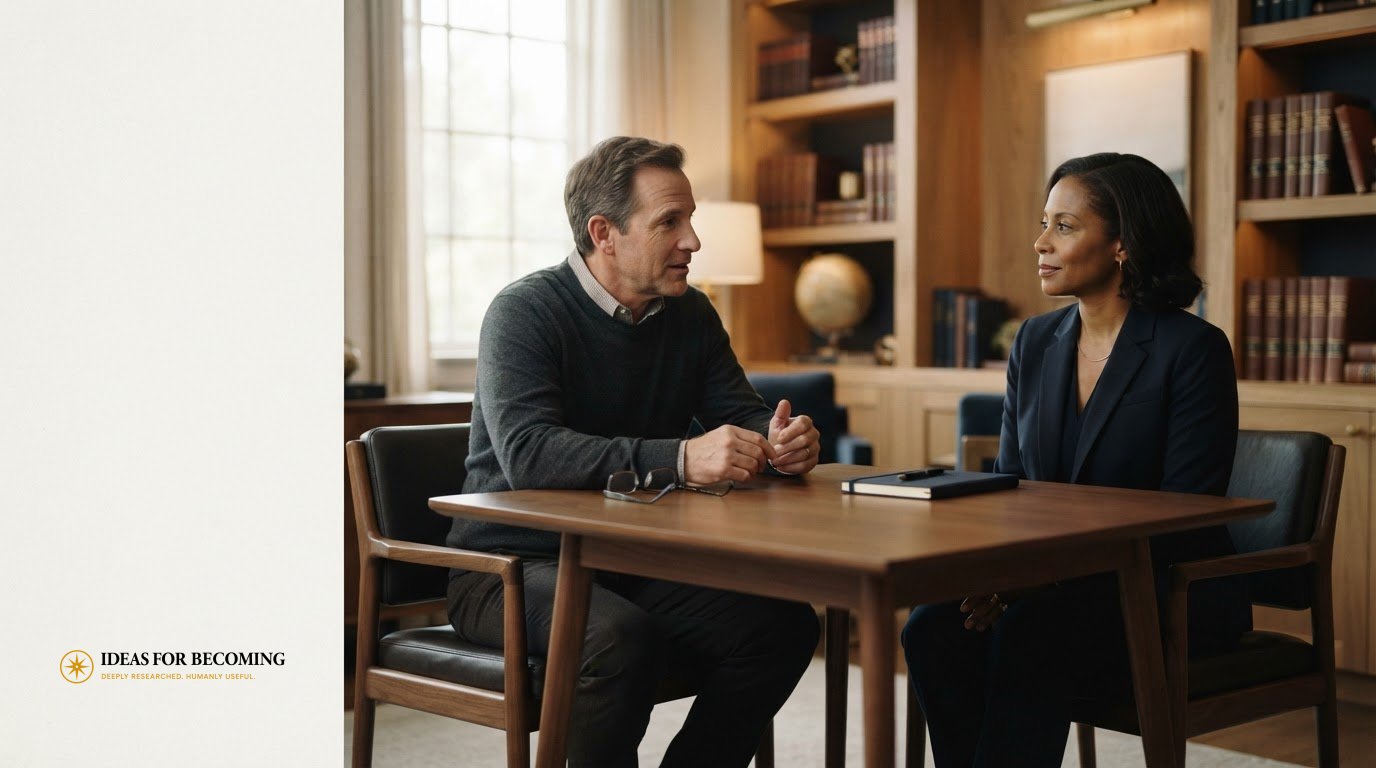
Executive Coach vs. Advisor: Which Kind of Support Does a Leader Need?
Choosing between an executive coach vs advisor? Learn how to match the right support to consequential leadership decisions and the leader you are becoming.

Executive Advisory on Purpose and Fulfillment: A More Human Way Forward
Seek executive advisory on purpose and fulfillment to align leadership choices with values and character. Discover who you are becoming beyond outward success.